We live in a world obsessed with results. We celebrate the victors, study the successful, and relentlessly analyse their outcomes, hoping to distill a repeatable formula for success. Yet, in this fervent pursuit of results, we often fall prey to a profound intellectual error: we mistake a good outcome for a good decision. The reality is that the path from choice to consequence is a landscape fraught with uncertainty, luck, and unforeseen variables. The most critical skill in navigating this terrain is not just making choices, but understanding the fundamental distinction between the quality of a decision and the quality of its outcome. This is more than an academic exercise; it is a zeroth principle for clear thinking in a complex world.
A Thought: The Deception of Resulting
Our minds are wired for simple narratives. A successful startup is attributed to a brilliant decision; a failed project is blamed on a poor one. This cognitive shortcut, known as outcome bias or “resulting,” is deeply ingrained. We judge the quality of a choice with the 20/20 vision of hindsight, forgetting the fog of uncertainty in which it was actually made. A well-reasoned, data-driven decision can be derailed by a stroke of bad luck, while a reckless gamble can be saved by a fortunate one. The most dangerous of these is the latter - the bad decision that leads to a good outcome. It teaches us the wrong lessons, reinforcing poor processes and rewarding blind luck as if it were strategic genius. It’s the equivalent of running a red light and arriving safely, then concluding that running red lights is a viable traffic strategy. To truly master the art of decision-making, we must untangle the process from the result and learn to judge our choices on their own merits, independent of where fortune’s wheel happens to stop.
A Lesson: Navigating the Four Quadrants of Reality
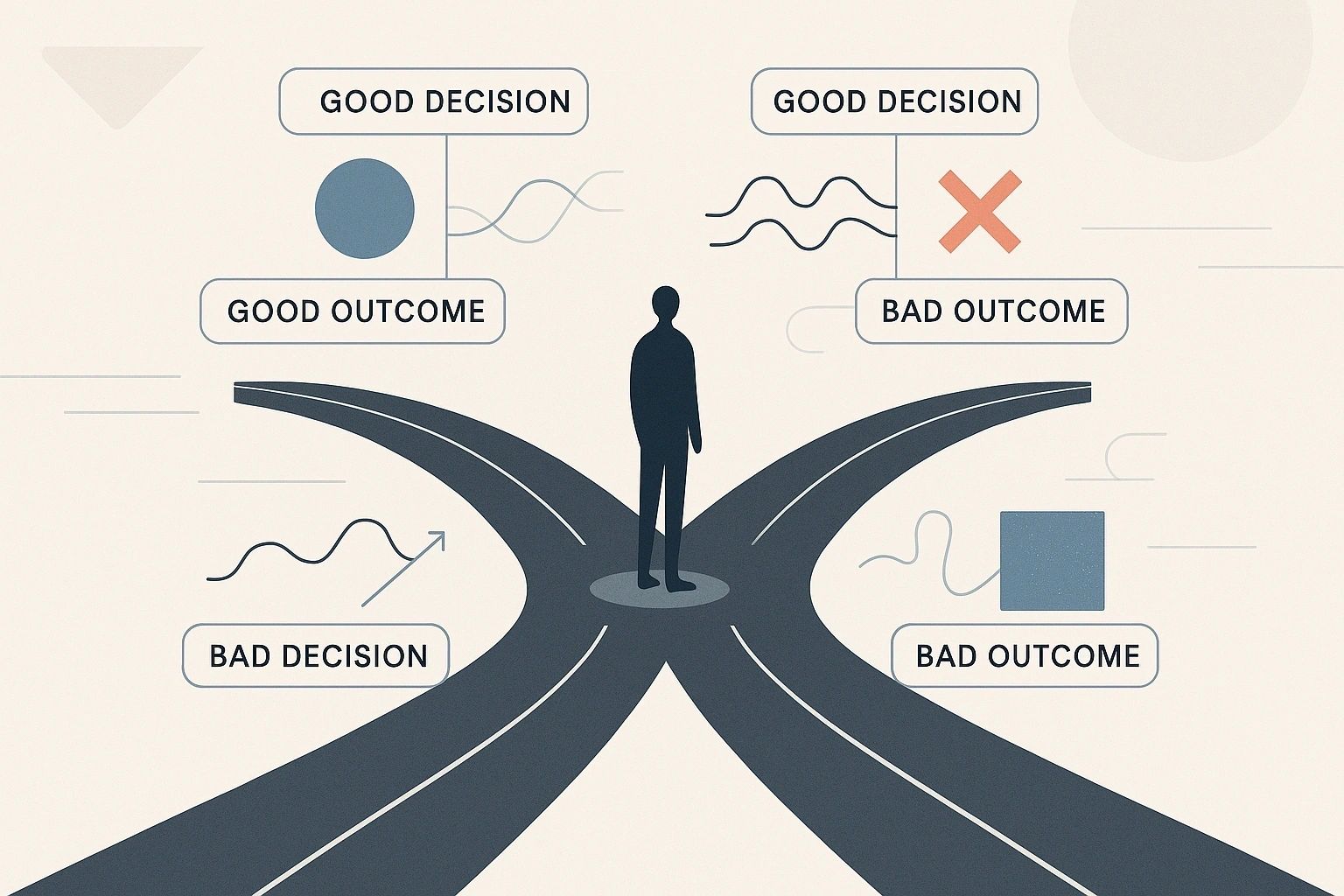
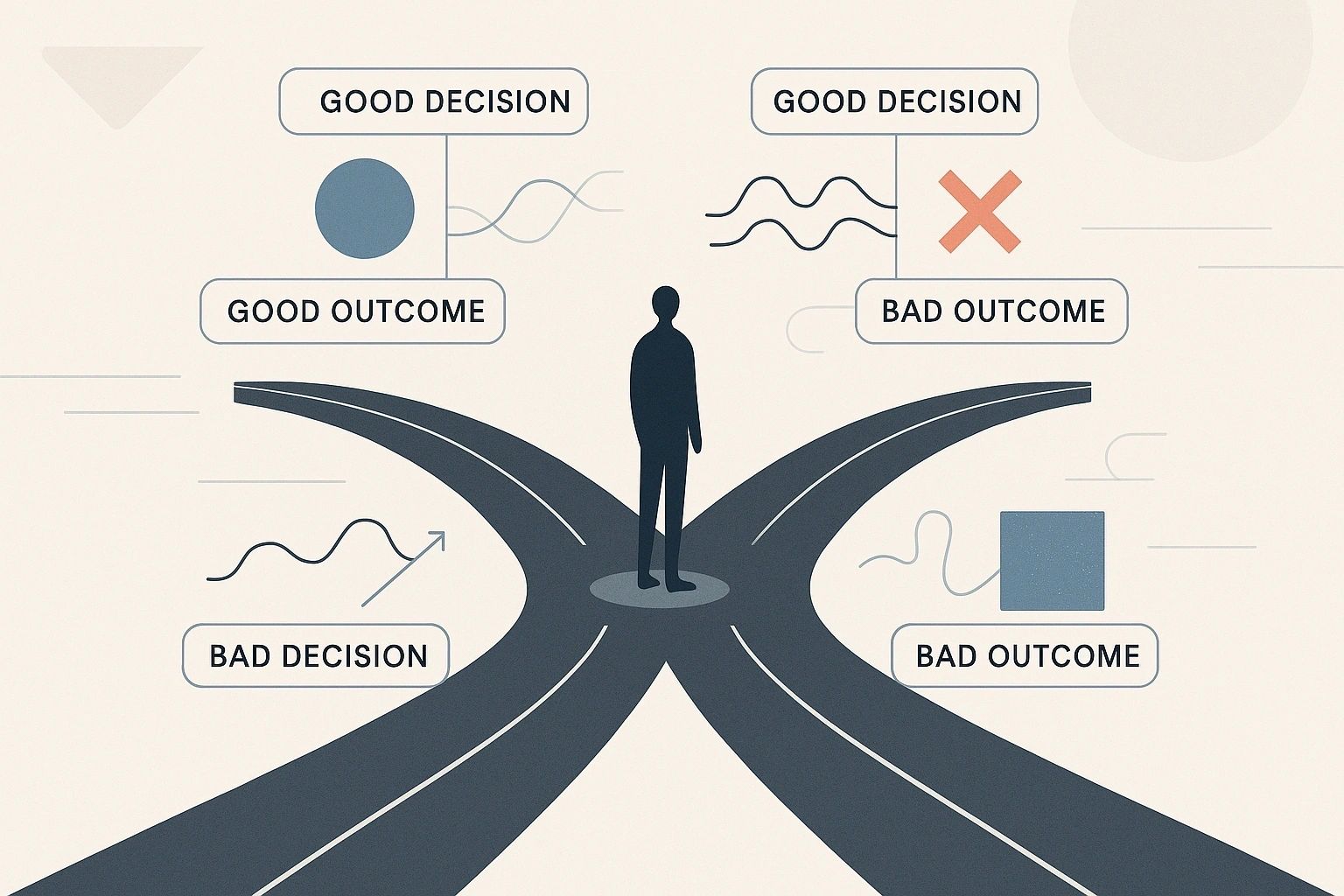
By separating decisions from outcomes, we can map reality into a four-quadrant matrix, a powerful tool for reflection and learning.
- Good Decision, Bad Outcome: This is the domain of calculated risks and unfortunate surprises. It’s where a sound investment is wiped out by an unforeseen market crash, or a well-designed product fails due to a sudden shift in consumer behavior. Look at the streaming service Quibi. Its plan was sound: make high-quality, short videos for people on the move. Its fatal flaw? It launched in April 2020, just as the pandemic sent its entire target audience home, glued to their TVs . A good decision was made instantly irrelevant by an unforeseen event. The lesson here is resilience and a commitment to process. We must recognise when we’ve done the right things for the right reasons and not be discouraged by an unlucky result.
- Bad Decision, Good Outcome: This is the treacherous territory of “dumb luck.” It’s the person who invests their life savings in a meme stock on a whim and becomes a millionaire. While the outcome is enviable, the decision process was deeply flawed. This quadrant is the most insidious because it creates a powerful illusion of skill. It rewards poor thinking and can lead to catastrophic failure down the line when luck inevitably runs out. The lesson is to be brutally honest with ourselves and recognise when we’ve been lucky rather than smart.
- Bad Decision, Bad Outcome: This is the quadrant of predictable failure. A poorly researched business plan leads to bankruptcy. The lesson is clear: a flawed process will, on average, lead to a flawed result. This is where we learn the direct consequences of our intellectual laziness.
- Good Decision, Good Outcome: This is the ideal state we strive for, where a robust process leads to a desired result. It is the culmination of sound reasoning, clear values, and a little bit of good fortune. While we can’t control the outcome, we can maximise our chances of landing in this quadrant by consistently focusing on the quality of our decisions.
A Call to Action: Cultivating Decision Quality
To escape the trap of resulting and improve our decision-making, we must shift our focus from outcomes to process. Here are a few ways to begin:
- Keep a Decision Journal: For any significant choice, write down your reasoning, the information you have, the alternatives you considered, and what you expect to happen. This creates a record of your process that you can review later, untainted by hindsight bias.
- Separate the Post-Mortem from the Result: When reviewing a project, analyse the decision-making process separately from the outcome. Ask, “Given what we knew at the time, was this a good decision?” before you even discuss the result.
- Reward the Process, Not Just the Outcome: In teams and organisations, create a culture that celebrates and rewards thoughtful, well-reasoned decisions, even if they occasionally lead to bad outcomes. This encourages smart risk-taking and discourages reckless gambling.
- Embrace Probabilistic Thinking: Learn to think in terms of probabilities rather than certainties. No decision guarantees success. The goal is to make choices that have the highest probability of leading to a good outcome over the long term.
Ultimately, we are the architects of our choices, but only the stewards of our outcomes. By focusing on building the most robust, thoughtful, and clear-eyed decision-making process possible, we can navigate the inherent uncertainty of the world with greater wisdom and confidence, knowing that we have controlled the only thing that is truly within our power: the quality of our own thinking.
Credit: The concept of separating decisions from outcomes | The psychological traps of Outcome Bias

Kushan Kahadugoda
Strategist, founder and author exploring technology, leadership and human potential.
About Kushan