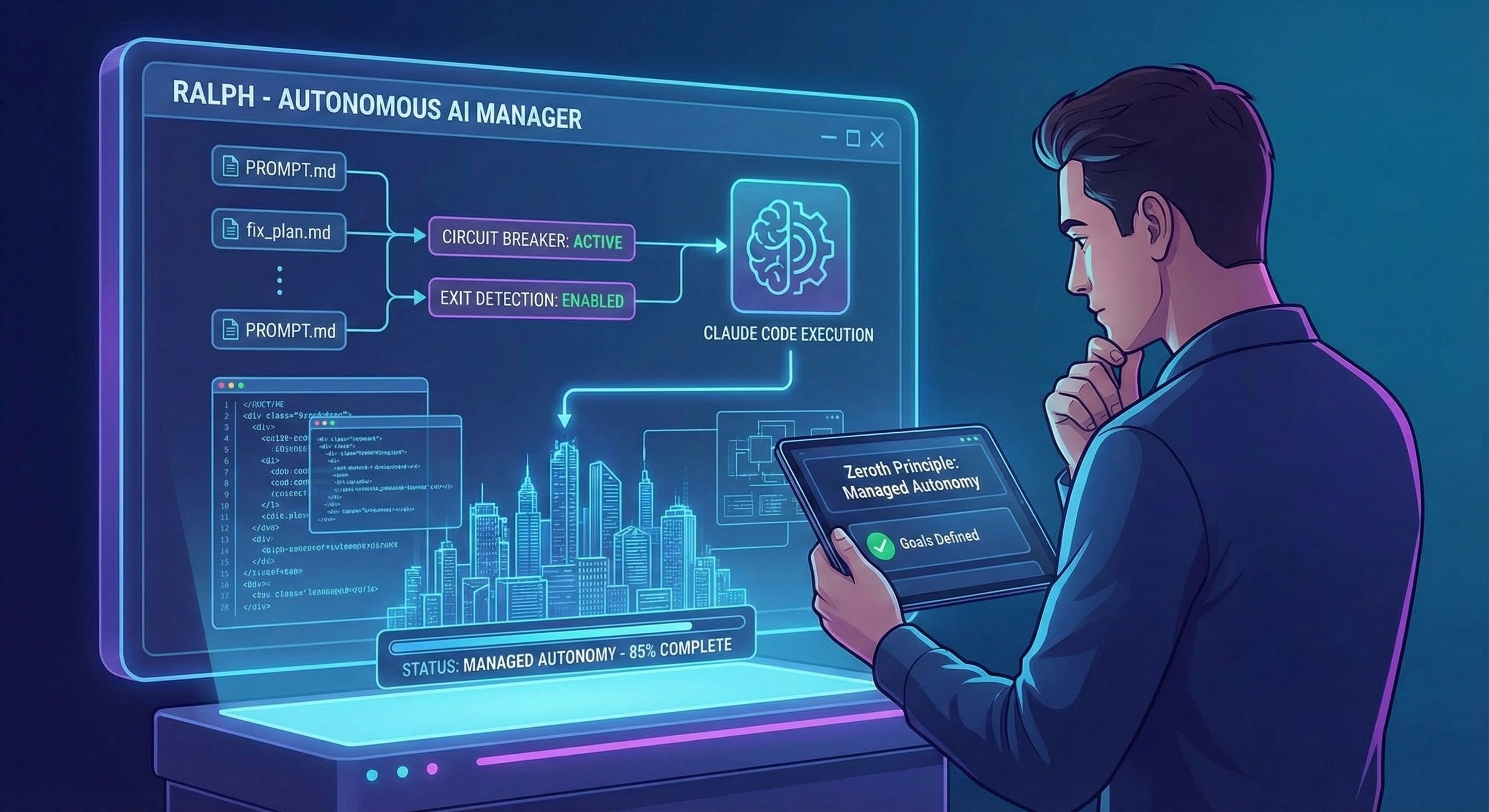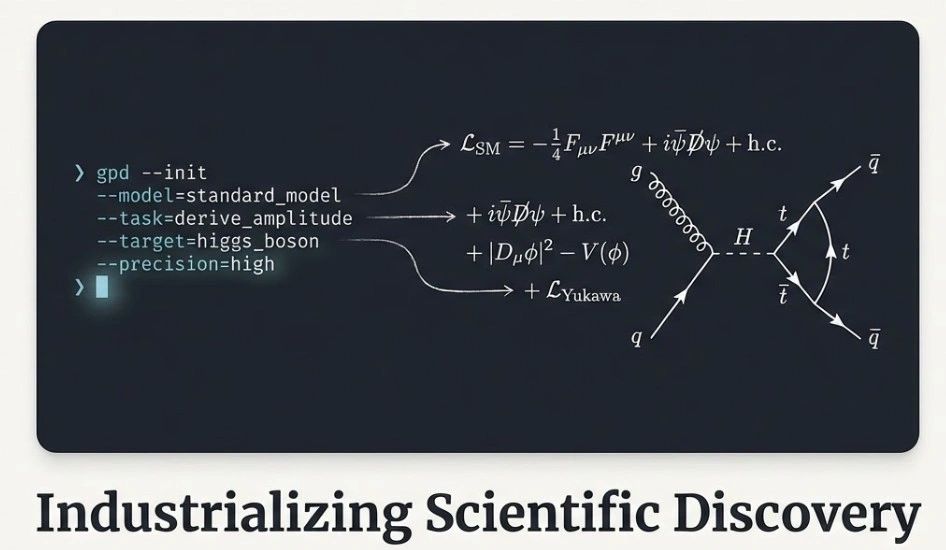
The growth and progression of AI over the last few months have been nothing short of remarkable. Things that were impossible a couple of months ago are now solved problems. Hard sciences, especially Physics, have been a truly challenging problem domain for AI for a long time. We were able to use AI chatbots like ChatGPT, Gemini etc. help us write excellent science papers based on existing knowledge corpuses. However, the true discovery of scientific knowledge has not been a consistent outcome that could be delivered via AI solutions, until now. Agentic AI Physicists are now a reality. They can actually perform new knowledge discovery at remarkably repeatable and consistent manner.
One such development is the open source research solution Get Physics Done. They have developed an AI agentic solution to help solve hard Physics problems. If you are a physics researcher or a physics enthusiast, Get Physics Done would help accelerate knowledge discovery and knowledge creation pathways for physics.
One may wonder, why we simply cannot use an LLM (large language model) with advanced prompting for this work. To answer that question, we need to first understand the main differences between an LLM-based AI versus an AI Agentic Physicist. The following diagram provides a key comparative summary on this.
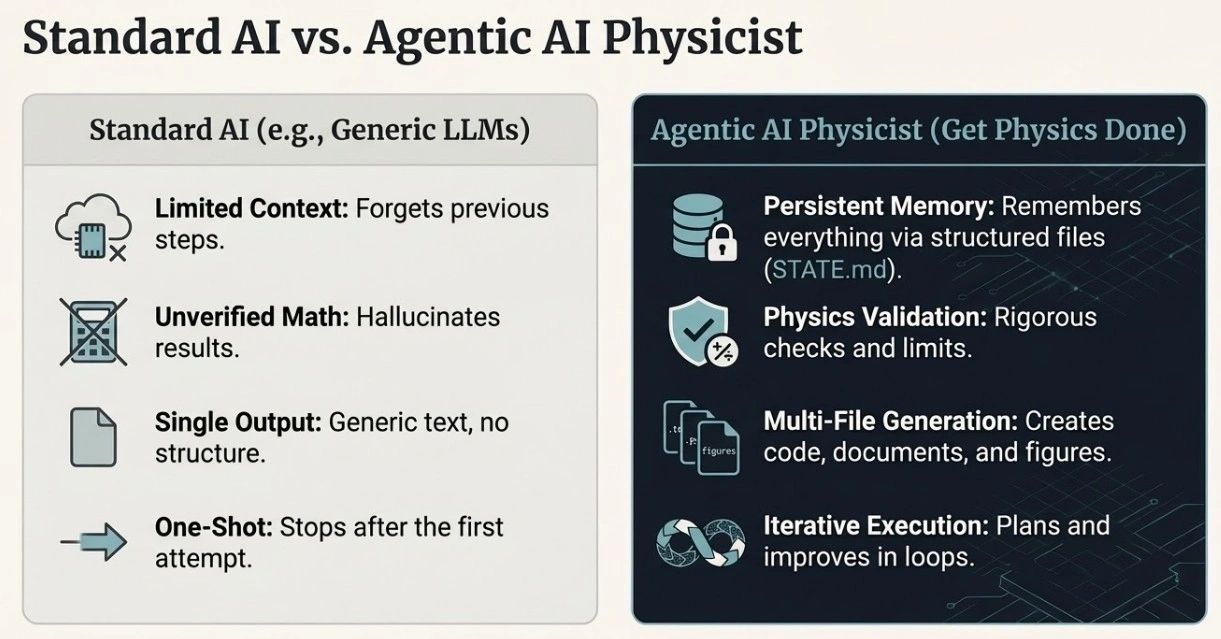
Therefore, hard physics research problems that cannot be solved with simple, manual AI prompting can benefit greatly from an AI Agentic approach. It is designed to tackle long-horizon challenges in Physics that require: Complex Quantitative Analysis, Systematic Physics Validation and Experimental Comparison.
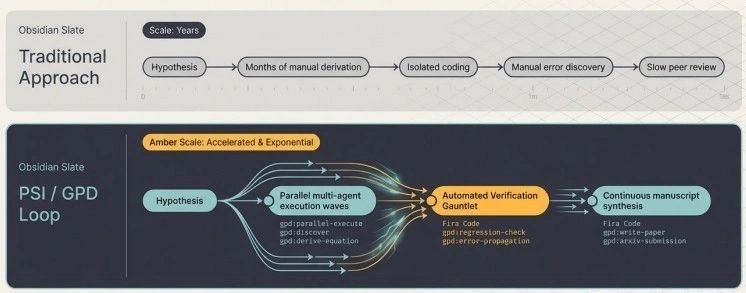
Below is the scientific method the AI Agentic Physicist follows compared the a traditional approach.
Call to Action
I invite you to explore the knowledge slide deck and the GitHub repo for Get Physics Done shared below. It may assist you to accelerate some of your physics research work in a surprisingly positive manner.
Knowledge Slide Pack: Industrialising Physics Discovery by Kushan Kahadugoda
GitHub repo for Get Physics Done: https://github.com/psi-oss/get-physics-done
Credit: https://www.psi.inc/

Kushan Kahadugoda
Strategist, founder and author exploring technology, leadership and human potential.
About Kushan