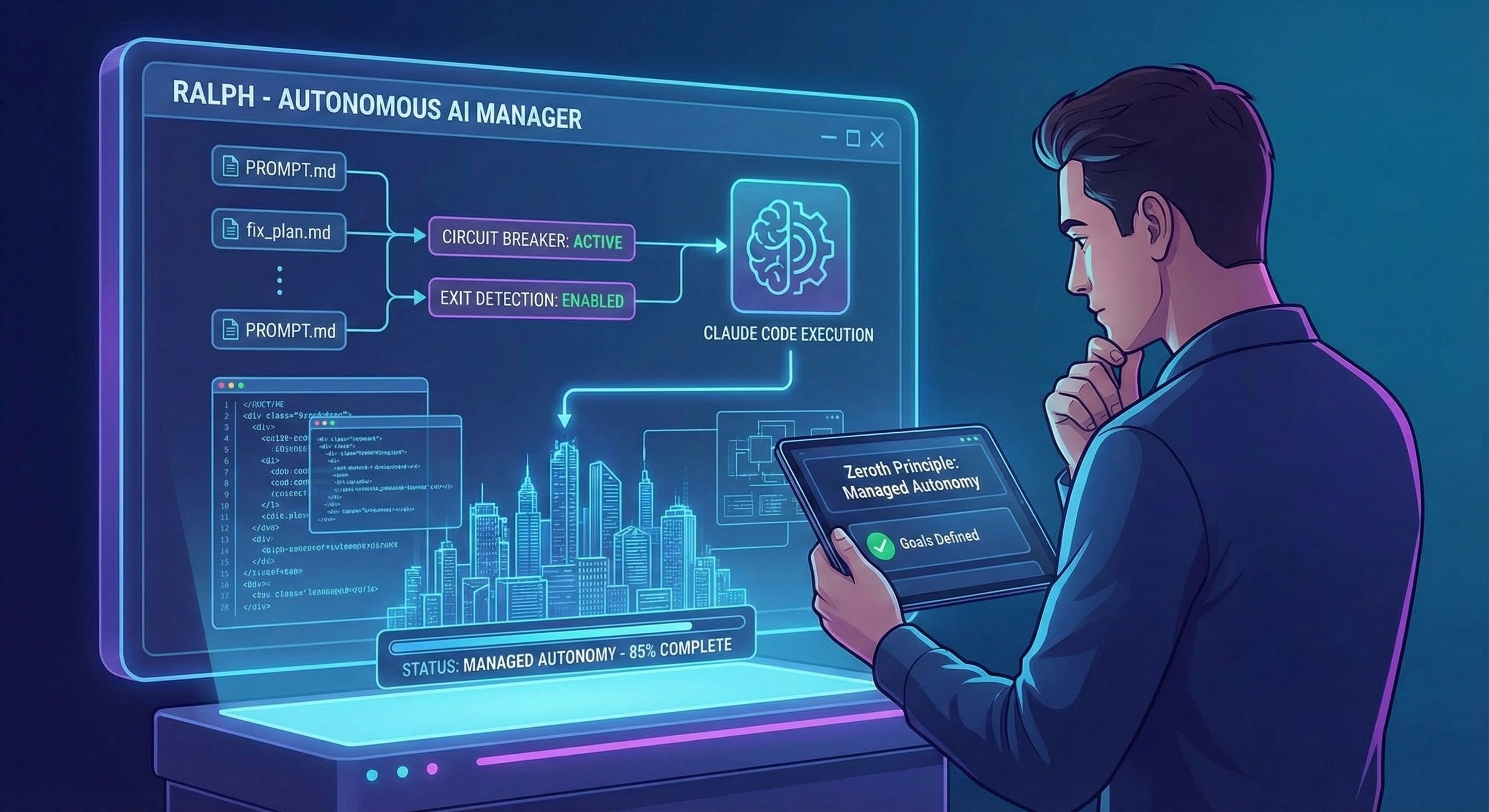
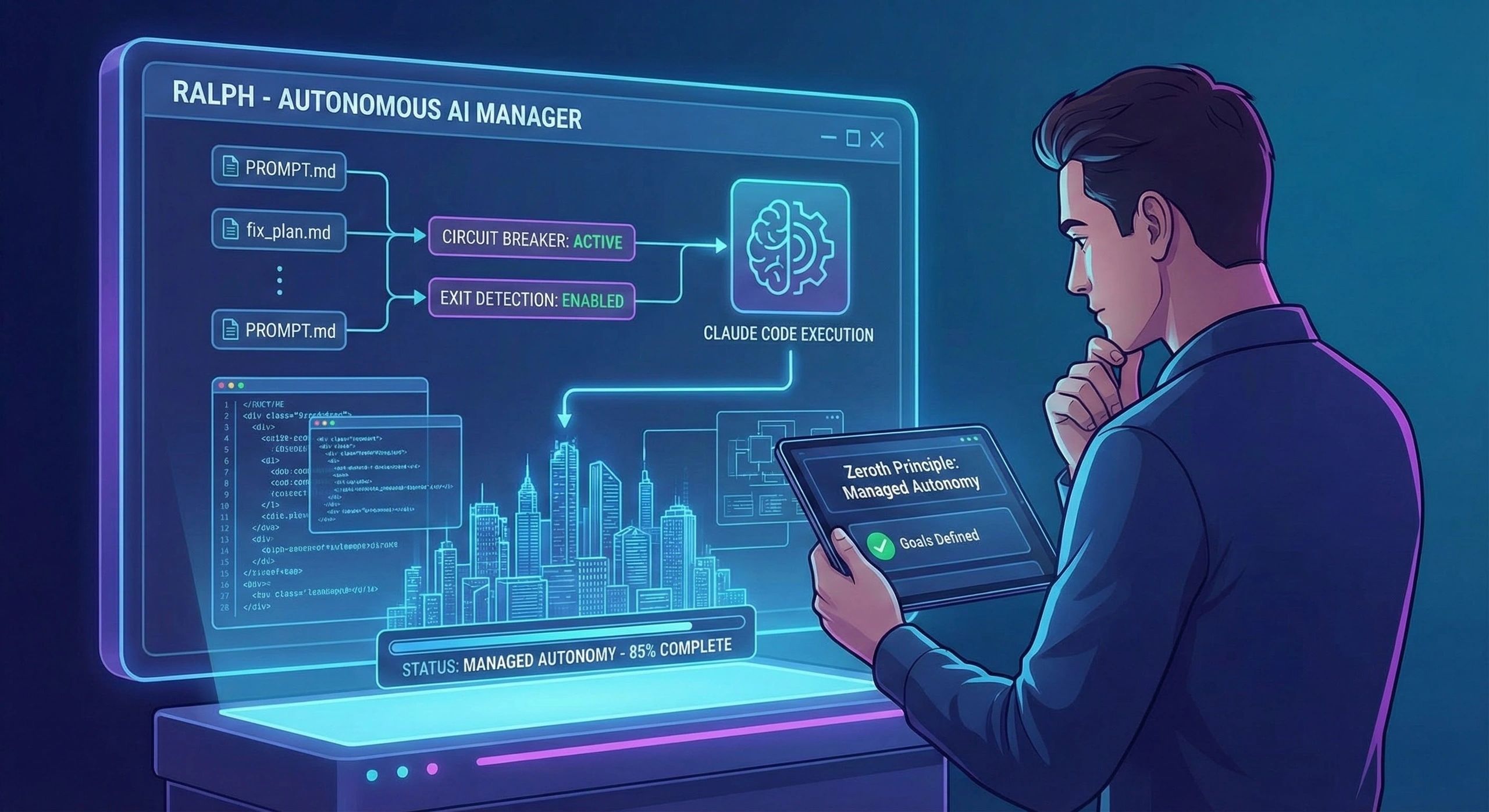
There is a moment in every engineer's journey when the tools stop feeling like extensions of the hands and start feeling like extensions of the mind. But recently, I stumbled upon a technique that pushes this even further - turning the tool into an extension of will. The concept is called Ralph, named playfully after the simple-minded Simpsons character, but the implication is anything but simple.
The realisation was this: Perfection is not a prerequisite for progress; consistency is.
Geoffrey Huntley, the originator of this philosophy, describes Ralph not as a product, but as a technique. in its purest form, it is a simple bash loop. It runs, it breaks, it retries. But by wrapping this raw loop in the safety rails of Frank Bria’s ralph-claude-code, we unlock a new paradigm of development that offers something rarer than speed: freedom.
A Thought: Finding Freedom in the Infinite Loop
For too long, we have treated AI interactions as high-stakes exams. We craft the perfect prompt, hold our breath, and hope for a perfect answer. If the AI fails, we blame the model. Ralph flips this on its head. It embraces the idea that the AI might be "deterministically bad in an un-deterministic world."
The genius of the Ralph technique is that it doesn't rely on the AI being right the first time. It relies on eventual consistency. It is a system built on faith - faith that if you provide the right constraints and let the loop run long enough, the software will converge on the solution. This is a fundamental shift from transactional coding (input -> output) to convergent coding (goal -> loop -> result). The freedom comes from letting go of the need to micro-manage every line of code and instead trusting the process of iteration.
A Lesson: Tuning the Instrument, Not Playing the Notes
Huntley offers a profound metaphor for this workflow: Tuning a guitar.
When Ralph (the agent) slides off the playground equipment and gets bruised, we don't ban playgrounds. We put up a sign that says, "Slide down, don't jump." In the Ralph workflow, we are no longer writing the code (playing the notes); we are adjusting the constraints (tuning the strings).
Your role changes from "Senior Engineer" to "Playground Architect." You aren't fixing syntax errors; you are writing PROMPT.md files and adjusting circuit breakers. When the output is wrong, you don't look at the code; you look inside. You ask, "Where was my instruction ambiguous? Where was the 'sign' missing?" This discipline of "deliberate intentional practice" forces you to articulate your intent with crystalline clarity. The code becomes merely a byproduct of your clarity.
A Call to Action: The ROI of "Good Enough"
The economics of this shift are staggering - stories of $50k contracts delivered for $300 in compute costs are not exaggerations; they are the early indicators of a market correction. But the true value isn't just financial.
To experience this freedom, you need to step away from the chat interface and into the terminal:
- Embrace the Loop: Download the
ralph-claude-coderepo here. It’s the structured, safe implementation of Huntley’s raw philosophy. - Trust the Grind: Set your
PROMPT.md, fire up the loop, and walk away. Let the fan spin. Let the logs scroll. The first few iterations might be chaotic. That's okay. - Iterate on the Instructions: When you return, don't fix the code. Fix the instructions. Tune the guitar.
The future of software isn't about who can type the fastest. It's about who can build the most resilient loops. Ralph is a messy, beautiful, imperfect engine of creation. And in its endless, stubborn repetition, it offers us the ultimate freedom: the time to think about what to build, rather than how to build it.
Credit: Ralph,Geoffrey Huntley’s Philosophy | Frank Bria’s Ralph
Kushan Kahadugoda
Strategist, founder and author exploring technology, leadership and human potential.
About Kushan